How do you measure the worth of your staff? In most schools around the country, teachers’ pay and progression are linked to pupil performance: success is measured by test results and league tables.
On the surface, this approach offers a clear picture or who is getting it right and who needs to make improvements.
But this approach is flawed. When we link teachers’ progression to pupil performance, without a mechanism to support and recognise professional growth, we risk compromising the health and happiness of our teaching communities.
Worse still, by measuring teachers’ success in test results, we overlook the need to nurture our craft to be the best practitioners we possibly can be – putting the long-term sustainability of a whole profession in jeopardy in the process.
At the Raedwald Trust, an alternative provision MAT in Suffolk, we were determined to do things differently. So we devised a new system for staff professional development in which progression is linked not to pupils’ academic performance, but to the self-improvement of teachers.
How did we do this? To start with, it is worth pointing out that our trust is a relatively young organisation; it was established in 2016 and the newest member school joined in 2019. We therefore have the benefit of being a growing learning community with a developing culture.
We had a great opportunity to establish a new trust-wide approach to professional development where every member of our team would be given the tools to achieve their professional goals, and where their practice would be nourished as a priority.
The big question was: what would such a system look like in practice? After all, there are no specific or mandatory requirements for self-improvement in teaching – even Teaching Standard 8, “fulfil wider professional responsibilities”, feels fairly elective.
We also had few existing models to work from; pupil performance is by far the most common measure of professional success.
Yet in every school, so many factors contribute to a pupil’s ability to achieve, including previous teaching and attainment, their home situation, and their mental and physical health. This means that holding a teacher accountable for pupil outcomes is unfair. Not only that, its effectiveness as a system is rooted in fear, and this can lead to performance-related stress, professional dissatisfaction and good teachers leaving the profession.
That’s not to say that pupils’ academic achievement shouldn’t be a priority – far from it – but rather that conventional performance management based on data-driven measures can be extremely counterproductive.
We wanted to replace conventional models with a programme of self-driven improvement that requires teaching and support staff to identify gaps in their practice and take responsibility for their own professional growth. We wanted to redress the balance by putting the emphasis back on honing our craft.
This would be a huge change, and given the scale and scope of it, we knew we would need outside help to guide us. We found this support in an experienced teaching school – Ipswich-based Orwell Teaching School Alliance, which engaged Halifax Teaching School – and education consultancies Everyday Leader and Greenfields Education.
With the input of these organisations, we set about creating a programme that emphasises professional growth, rather than performance management.
What does this programme involve? The first thing to note is that our model sits separately from accountability. This is a crucial aspect, as we need teachers to feel confident talking about areas in which they can improve, without fearing it will be seen as admitting a shortcoming that can be used against them if pupil results are not as good as hoped.
Of course, identifying gaps in knowledge is not easy, as teachers don’t know what they don’t know – this is as true for senior leaders as it is for junior teachers.
To overcome this obstacle, our programme starts with teachers rating themselves as “red, amber, green” (RAG rating) against the National Teaching Standards for their associated grade. This is a simple way to identify areas of development.
Staff are then given access to associated professional growth modules (created by us and hosted on a dedicated shared platform) which provide relevant reading material, including links to online research documents, TED talks, videos, and school-wide policies and documents.
Not only are we signposting key research that is available on a given topic, each piece of research has also been carefully unpicked by the project leaders, to identify specific pages or paragraphs of most relevance.
It was essential for us to go to these lengths to ensure that each module of learning is consistent in its quality and accessible for teachers who simply don’t have a great deal of time to dedicate to the task. The hope is that the modules will lead teachers to conduct more in depth study in areas of particular interest to them when time allows.
In addition to focusing on the quality and accessibility of the modules, it was also important for us to prioritise sustainability and scalability.
Schools are bursting with expertise and the programme encourages teachers to identify areas of mastery within their team and to make use of them through training sessions, mentoring, observations and discussions.
To support this work, we have created a “talent directory” which signposts those members of staff who are best placed to help colleagues develop in a particular area. The idea is that teachers become experts within their field and then lead others in developing their own practice.
Too often, ticking the professional development box has been about booking yourself onto a training course. But a training course is only as good as what you do with the knowledge when you get back to school.
Ultimately, our programme is about supporting the growth of professional communities from the inside, and creating a model that other schools can also engage with and help us refine. We see this as an infinitely more self-sustaining way of developing the teaching leaders of the future.
Of course, there is an expected level of discomfort associated with introducing what amounts to a pretty radical cultural shift. We’re asking our people to go back to self-directed learning in a way that many haven’t experienced since university.
In the future we would like to find a way of giving everyone more time to invest in their learning within the programme, but for now, it’s essential that they can engage with it in the time they have. It has to be heavily scaffolded and delivered in digestible chunks, and our expectations of what can be achieved have to be realistic, because the day job is massive.
However, by doing all this we believe we will help improve the wellbeing of our teaching staff and improve their professional skill sets too. And this, in turn, can only help to improve the lives and outcomes of the children they teach.
Angela Ransby is CEO of the Raedwald Trust. Lauren Meadows is a Director at Greenfields Education.
After a successful application to The National Lottery Community Fund, the Raedwald Trust has been awarded an amazing grant of £10,000!
This fantastic donation was awarded by The National Lottery Community Fund directly to the Raedwald Trust, and will be used to purchase digital devices for Raedwald Trust pupils.
Angela Ransby, CEO of The Raedwald Trust, said: “This is an amazing amount of money to receive, and the timing couldn’t be more crucial.
“The support of The National Lottery Community Fund is greatly appreciated and will make a life changing difference to our families during these difficult times.”
For more information about The National Lottery Community Fund and how its funding is helping organisations at this time, click here.

The impact of the coronavirus pandemic has affected many aspects of ‘normal’ daily life, including how our children are educated and schools operate.
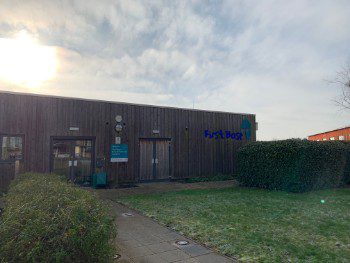
Stacey Laws, Head Teacher at First Base Ipswich Academy gives an insight into what it’s like to be an educator at this time.
“We have had pupils on-site at First Base Ipswich throughout the lockdown period, including during the Easter holidays. Provision provided during the Easter break did change as we ran a holiday club with lots of sport, games, crafts, cooking and fundraising activities. During term time a lot has remained the same – our pupils are still following the school timetable and engaging in their usual lessons and learning.
“Teachers now plan for and provide onsite learning as well as giving support to all of our home pupils. This has included adapting plans and providing work packs to enable parents to support learning at home.
“As our pupils are young, we rely quite heavily on parental support to continue their learning at home – and parents have been great! We have provided books to ensure children have quality reading material, as well as supplying food and supplies for families in need. We are also regularly carrying out doorstep visits and making phone calls to our families.
“Our children have been very resilient in light of all the changes. The pupils attending school onsite are continuing to engage in learning with positive attitudes. They are missing having all their friends here to play with, and they often discuss the coronavirus and ask questions to seek reassurance. Pupils are being very sensible in discussions about the situation and also about engaging brilliantly with hand washing and general hygiene practises.
“Pupils at home are proudly showing us their home learning when we visit. They are missing school friends and ask when the “germs will be gone” so they can come back. A couple more pupils have started re-attending site recently and they have been extremely happy and excited to return.
“The situation has naturally presented a few challenges. As well as new ways of working to adapt to, we need to ensure that the home learning packs are engaging for pupils and also give parents confidence to provide pupils with support – we need to keep learning moving forwards for pupils who are at home. We are also providing telephone support to parents to help manage pupil behaviours, which are intensifying and escalating as lockdown continues.
“Most of the First Base Ipswich staff members have been working onsite supporting pupils, so communicating as a team can be mostly done in person. I have quite a few online meetings and have been staying in touch with remote learning pupils through regular doorstep visits and phone calls.
“The commitment from First Base Ipswich staff throughout the lockdown period has been outstanding – especially working over the Easter holidays to ensure that there was provision for our most vulnerable learners.
“I have also been impressed at how sensibly our pupils have been discussing the pandemic and the understanding they have at such a young age.”
There is a dedicated section on the homepage of the Raedwald Trust website where coronavirus updates are being posted. Visit www.raedwaldtrust.com for the latest information.
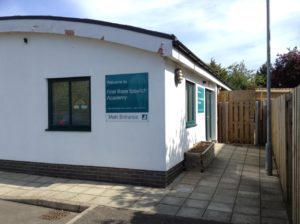

Raedwald Trust pupils who are currently learning from home are impressing their teachers with their enthusiasm and brilliant work!
Through photographs, videos, emails and progress phone calls with parents, teachers are able to see the fantastic progress that pupils are making.
Pupils have been completing work that can be linked directly to their EHCP (Education, Health and Care Plan) targets. Some pupils are also using the Raedwald Trust Student Hub – a remote learning system that makes learning at home a more interactive experience. Click here to read more about Student Hub at the Raedwald Trust.
The Raedwald Trust website also has a dedicated section packed full of home learning resources. All pupils can access these resources by visiting www.raedwaldtrust.com/home-learning/.
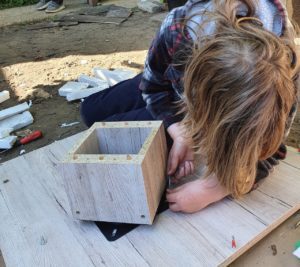
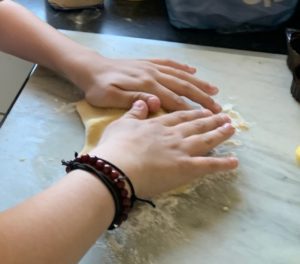
You can see some of the brilliant work by Raedwald Trust pupils below.

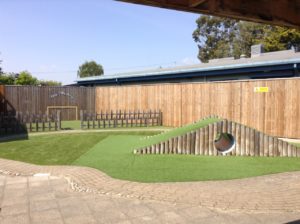
Pupils from First Base Ipswich Academy have completed a sponsored bike ride to raise money for NHS Charities Together.
Inspired by Captain Tom Moore and his amazing fundraising walk, three boys from First Base Ipswich Academy, part of the Raedwald Trust, decided that they could also help to support the NHS – but this time by cycling!
On Wednesday 15th and Thursday 16th April, the boys cycled a whopping 350 laps around the track in the First Base playground.
To spread the word about their endeavour, the boys made a video which their teachers shared on the internal staff blog. Staff then set up a Just Giving page for the pupils to help boost donations.
After the first day of cycling the boys didn’t have many donations, but they were resilient and carried on. After a quick lesson about using persuasive language, the boys then created a second video encouraging people to donate. They have amazingly managed to raise almost £600 so far.
Stacey Laws, Head Teacher at First Base Ipswich Academy said: “The boys were pretty exhausted by the end of the second day but they were (rightly) very proud of themselves.
“We are extremely proud of the kindness they have shown and their motivation to do something to support the NHS. They showed real resilience and great community spirit.”
It’s not too late to show your support and donate to this brilliant cause. Please click here to view the fundraising page.

A Raedwald Trust pupil at Alderwood Academy has been trialling a remote learning system that has made learning at home a more interactive experience.
The Student Hub system involves work being shared by a teacher to a secure online folder that the pupil can then access. The teacher can add comments to documents as well as seeing how the pupil is getting on with the work in real time, adapting pupil tasks and their workload accordingly.
During the trial, any work that the pupil has found challenging in their home learning pack, has been able to be addressed through discussions on the phone and online with their teacher. The teacher uses the Student Hub to support the pupil by sharing resources, and also setting additional work for them to complete to help their understanding.
Kirsty Osborne, Teacher at Alderwood Academy has been trialling the Student Hub. Kirsty said: “The experience so far has been really lovely for both myself and the pupil.
“He really seems to be enjoying combining his home learning pack and online learning needs, and has been asking for additional work – work perhaps I might not have thought of.
“In addition to this, I believe this is exactly what he needs to keep his motivation for learning high. It is simple, bespoke with a clear framework for him to work to – anything else would be overwhelming. I was thrilled to be a part of this trial and am excited to continue to move this forward with the children.”
Following the successful trial of the Student Hub, the Raedwald Trust has started the process of rolling out this way of working to all pupils within the Raedwald Trust.
If your child is a Raedwald Trust pupil and you would like more information about Student Hub, please contact your child’s Head of School.
The Raedwald Trust and Copleston High School in Ipswich have jointly undertaken a venture to support children and families in need with food, toiletries, good quality clothing and home essentials during the ongoing Covid-19 crisis.
Starting on 20th April 2020, the ‘Community Shelf’ venture supports families through the eyes of the children from both educational organisations. The support is based on a principle of ‘we share’, and operates as a distribution centre for disadvantaged children and their families (with the understanding that disadvantage isn’t synonymous with deprivation).
By pooling their combined staff and contact resources, The Raedwald Trust and Copleston High School feel they can respond better together to meet the needs of children and their families to deliver the Community Shelf initiative.
The Community Shelf distribution centre is based
at Copleston High School and is operational part time through the week. Donations are being sourced and collected from local shops, with staff from the Raedwald Trust and Copleston High School delivering the essential items to families.
Angela Ransby, CEO of the Raedwald Trust said: “We are working hard to provide this much needed service to our children and their families.
“Once the infrastructure is fully established for the Community Shelf, we are keen to expand the support on offer – perhaps to include a Community Library, or Community Learning Centre.
“We are committed to supporting our pupils and their families at this challenging time and will do all we can to help.”
If you feel you can help or donate, or would like to access help from the Community Shelf team, they can be contacted by emailing communityshelf@raedwaldtrust.org

The Raedwald Trust has been fortunate to receive donations of food and care items from local businesses and charities to support its most vulnerable pupils and their families during the Covid-19 crisis.
The donations from John Lewis, McDonalds, Waitrose and the Rope Trust have been gratefully received by the team at the Raedwald Trust, and went directly to pupils and families who need it the most.
The Rope Trust have provided two very generous donations of over £7000, and continue to support the Raedwald Trust and its families by being there to call upon when needed.
McDonalds in Colchester donated a lot of their fresh food, including milk, eggs, rolls, bacon and salad, when they had to close. Packages were then immediately put together and delivered to around 30 families in the Ipswich area.
Waitrose in Ipswich donated essential items on a number of occasions, and also provided Easter eggs for Raedwald Trust families. One particular staff member (Gemma) thoughtfully picked items from the shelves to cover all the basics needed – even adding toilet rolls pasta and rice into the packages!
Sharon Williets, Joint Trust Business Manager at the Raedwald Trust, said: “The donations have enabled us to help more families than just those that qualify for free school meals. They also meant that we could help them immediately – before the government had put together their free school meal package.
“We are very grateful to these businesses for their generous donations. They have made and will continue to make a huge difference to the lives of our most vulnerable pupils and their families.”

In response to the recent isolation guidance concerning the Coronavirus outbreak, the team at the Raedwald Trust have put in place a plan, which sees the academies of the Trust repurposed into ‘Safe Havens’.
The Raedwald Trust Safe Haven offer has three strands. The needs and safety of each individual pupil at the Trust have been addressed regarding which strand is suitable for them. The strands are:
- The onsite child offer
- The offsite child offer (including ‘eyes on’ doorstep visits)
- The telephone welfare / learning support offer
The onsite child offer
The onsite child offer is both a full time and part time programme which pools staff from across the Trust. It’s available at six locations:
- First Base Ipswich
- Alderwood
- St Christopher’s
- Parkside
- Lindbergh
- Outreach – The Lodge
The offsite child offer
This offer involves staff dropping food, supplies and work to a pupil’s home (with staff observing a strict safety process and maintaining social distancing of at least two metres).
Staff undertaking these deliveries also ask pupils to give them a wave through a window.
The telephone welfare / learning support offer
All Raedwald Trust pupils receive a welfare call each day (unless this has been risk assessed as not necessary).
Angela Ransby, CEO of the Raedwald Trust said: “We are responding to a ‘call to action’ in extraordinary circumstances and we will step up.
“The Safe Haven offer has been put into place so that we can continue to do as much as we are able for our pupils in these unprecedented times.
“The plan will be adapted and reviewed based on any future changes to government advice.”
If you are a parent or carer and are unsure of the support being provided for your son or daughter, please use the contact details below to get in touch.
Alderwood Academy
Tel: 01473 725860
Email: adminalderwood@raedwaldtrust.org
First Base Bury St Edmunds Academy
Tel: 01284 762453 / 07850 939385
Email: adminfirstbasebury@raedwaldtrust.org
First Base Ipswich Academy
Tel: 01473 719553
Email: adminfirstbase@raedwaldtrust.org
Lindbergh Campus
Tel: 01473 719559
Email: adminlindbergh@raedwaldtrust.org
Montgomery Road Campus
Tel: 01473 604918 / 07763784028
Email: adminmontgomeryroad@raedwaldtrust.org
Outreach Teaching Service
Tel: 07712 237808
Email: acrozier-green@raedwaldtrust.org
Parkside Academy
Tel: 01473 717013
Email: adminparkside@raedwaldtrust.org
St Christopher’s Academy
Tel: 01473 725115
Email: adminstchristophers@raedwaldtrust.org
Westbridge Academy
Tel: 01473 251329
Email: adminwestbridge@raedwaldtrust.org
Raedwald Trust Central Team
Tel: 01473 440572 / 440573 / 440474
Email: ceo@raedwaldtrust.org
First Base Bury St Edmunds Academy, a pupil referral unit for Foundation Stage and Key Stage 1 children and part of the Raedwald Trust family of schools, have recently been awarded the Marjorie Boxall Quality Mark Award (MBQMA).
The MBQMA is an accreditation scheme from Nurture UK that recognises excellence in nurturing, and is regarded as a real honour for the schools that manage to achieve it.
The award is reflective of the hard work and dedication of the young people and staff at First Base Bury St Edmunds, and is a brilliant recognition of the ‘Nurture Group’ approach to teaching that the school follows.
The ‘Nurture Group’ approach is a hybrid of the home and school environment, designed to bring together aspects of the National Curriculum with a social, emotional and mental health (SEMH) curriculum that addresses any unmet social, emotional and behavioural needs of pupils. There are 6 principles of nurture which underpin the experience the children have at the centre:
– Children’s learning is understood developmentally.
– The classroom offers a safe base.
– The importance of nurture for the development of well being.
– Language is a vital means of communication.
– All behaviour is communication.
– The importance of transition in children’s lives.
The assessment and tracking of the childrens’ progress at First Base Bury St Edmunds ensures that the support they need is put in place – primarily through the use of the Boxall Profile, which identifies a profile of strengths and difficulties, and then through personalised blocks of support which is delivered by the child’s Key Worker.
Karen Walmsley, Teacher and Special Educational Needs Coordinator (SENDCo) at First Base Bury St Edmunds and four inclusion support workers worked on the award for six months in order to gather a file of evidence to support the application, which was then submitted to the assessor.
The assessor then spent a day at First Base Bury St Edmunds, working with staff and children. Whilst on site the assessor was able to see the experience the children have through the routines of a normal day at the centre.
Karen Walmsley, Teacher and Special Educational Needs Coordinator (SENDCo) at First Base Bury St Edmonds said: “We feel very proud that our centre has been recognised for having the children at the heart of what we do.
“The award acknowledges the strength of the nurture principles that underpin learning at First Base. It also recognises that the routines, structures and paperwork which we use are of a high quality and benefit the children.”
For more information about First Base Bury St Edmunds Academy, including contact details, please click here.
The paediatric services provided by the team on Ipswich Hospital’s Children’s Ward have recently been rated as ‘Outstanding’ by the Care Quality Commission (CQC).
East Suffolk and North Essex NHS Foundation Trust (ESNEFT) pediatric services team provide care to babies, children and young people at Ipswich Hospital. Providing education for young patients as part of this team, are the teachers from the Ipswich Hospital School.
The Ipswich Hospital School is a satellite school of the Raedwald Trust, and provides education for pupils who are in-patients on the paediatric wards of The Ipswich Hospital in a dedicated school room.
Within their report, the CQC gave a special mention to the education provided to young people at the hospital, stating that children do not fall behind with their education when they have to spend a long time on the ward.
The school room on Boxford Ward provides education for any school-age child, offering tuition and activities based on the National Curriculum.
The team also help children who may be missing exams due to being in hospital – a number of young people have taken GCSE and A Level exams in the school room.
Kate Kingsford-Bere, Hospital School Lead Teacher, said: “The children are going through a lot when they come to hospital so we try to make it a very calm and positive experience for them all.
“We don’t have medical intervention here, it’s very separate from the ward. It makes it ‘normal’ for the children and parents find it very supportive too.
“We are delighted with the ‘Outstanding’ rating – we always do our best to give the young people the best possible educational opportunities. I’m really proud of the team.”
For more detailed information about the report, click here to visit the East Suffolk and North Essex NHS Foundation Trust website.
The Ipswich Hospital School is on Twitter! Follow @Ipshospsch to find out about their work, news and latest updates.

The Medical Needs in Schools (MNIS) Suffolk project plans to launch in the week beginning 27th April 2020.
This exciting series of workshops is a FREE service for Suffolk schools, and will address how pupils with medical needs are taught in schools. Training is led and delivered jointly by colleagues from the Raedwald Trust serving as MNIS – Suffolk, and MNIS – Oxon.
By signing up to the project, schools will be able to gain valuable knowledge and practical tools to support their pupils with medical needs. In addition, the project will allow schools to:
- Ensure they are compliant in Department for Education statutory and best practice guidance
- Attend a programme of free training (specialist workshop sessions on specific medical needs relevant to their pupils)
- Benefit from a local and national network of partnership with schools, health professionals, hospital schools
- Attend training that will provide a lasting impact on their school through helping to build capacity and develop their pathways, including access to a free two-day Mental Health First Aid Training (MHFA) course – certifying one member of staff for each school (worth £300 per delegate)
- Further develop ideas and communication around children with medical needs
The free sessions, for a maximum of two delegates per school (a Senior Leadership Team member and Medical Needs Champion) will be delivered on:
- 27th April 2020 – Primary Schools training day
- 28th April 2020 – Secondary Schools training day
- 29th/30th April 2020 – For a Senior Leadership Team member / Medical Needs Champion – a series of workshops for partner schools to sign up at no cost:
- Raising Awareness of Mental Health (Mental Health England half day training)
- Persistent Physical Symptoms (Helen Griffiths, Principal Clinical Psychologist – Oxford University Hospitals)
- Anxiety (Helen Griffiths, Principal Clinical Psychologist – Oxford University Hospitals)
The Raedwald Trust are committed to supporting Children with Medical Needs in Suffolk and beyond. Please do register interest now. If dates do need to change due to the existing developing public health situation we will inform you as soon as possible.
Schools can sign up to this fantastic project for free by emailing MNIS@raedwaldtrust.org. For a printable flyer about the project, please click here.
Pupils from Westbridge Academy wowed the audience with their performances at the recent ‘Celebration 2020’ festival at Snape Maltings Concert Hall in Suffolk.
On Tuesday 3rd March, five Westbridge pupils performed as part of the six-day festival which showcases diverse music from young performers from schools and community music groups across Suffolk.
The Westbridge pupils’ performances were split into three parts – firstly, two pupils sang ‘If I Ain’t Got You’, by Alicia Keys to a backing track. A pupil then rapped his own lyrics over a beat called ‘Pretty Lies’ which was composed by another Westbridge pupil. For the performance, the beat was broken into loops and performed live on stage electronically.
The final part of the performance saw two learners singing ‘Read All About It’, by Professor Green and Emeli Sandé. They were accompanied on the piano by the Raedwald Trust’s Learning and Progress in Music tutor, Gil Walters
Robert Gildon, a professional baritone opera singer, was the compère for the evening. He interviewed the pupil who performed his own rap lyrics live on stage about his work. The pupil was able to explain how he finds writing rap lyrics a way to express his feelings, which he shared with the audience in the rap he performed.
Carey Fish, Head Teacher at the Westbridge Academy said: “We were really proud of the young people, both for their excellent performances and the work that went in prior to the show. Additionally, pupils attended the workshop on the day and the dress rehearsal for the finale, and really owned it and joined in.
“The pupil who performed their rap thanked Westbridge Academy staff for encouraging him to perform as he came off stage – he just wanted to do it all again! In fact they all did.
“Phillipa Reive, Director of Creative Campus at Snape Maltings commented after the show that the whole backstage team at Snape were ‘choked up’ over the Westbridge pupils’ performances, and the personal journeys they had made to be able to perform at the event. She complimented us all on our work.
“It was a tremendous performance all round!”
These performances underscore the commitment the Raedwald Trust has to the arts and giving pupils the opportunity to celebrate and showcase their skills. For more information about the celebration event at Snape Maltings Concert Hall, please click here.
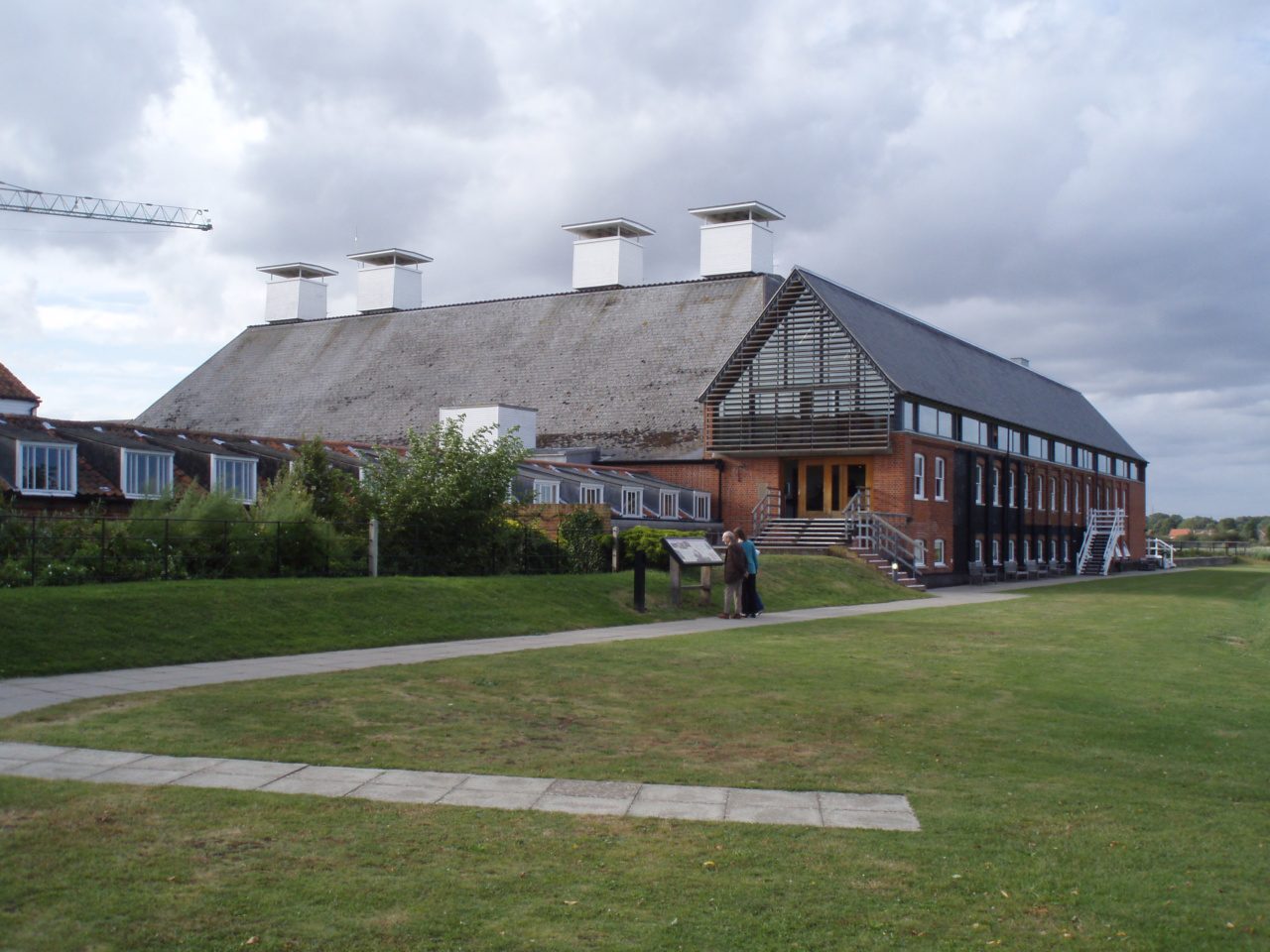
Snape Maltings Concert Hall
Following a successful two-month trial, the Raedwald Trust has appointed an experienced British Sign Language (BSL) teacher to teach the language to its secondary age pupils.
The Trust hopes that the unique move to teach BSL to ‘hearing’ pupils will break down barriers with deaf and hard of hearing communities – making communication accessible to all. It will also give pupils a practical skill for life.
BSL teacher George Andronic has been brought on board to deliver the lessons. George has been teaching deaf pupils for over a decade, can read and write in eight languages and sign in seven. He also created a BSL Primary Curriculum for deaf children from scratch as part of his Masters degree and now runs his own company: Home Tuition for the Deaf.
George said: “At the start of BSL sessions in September the pupils and I found it challenging to communicate because we belong to different worlds, however, we gradually built up our rapports and broke down our barriers to communication. The pupils gradually expressed themselves, which was difficult for them, by maintaining eye contact and using slight facial expressions.
“The pupils have responded well to my lessons by engaging well in varied activities, such as conversations, and practising their fingerspelling, which is challenging for them, and conversation in pairs.
“The language is important for the Parkside Academy pupils because this enables them to express themselves by sharing their experiences and developing their communicational skills.
“BSL is an emotive / expressive and rich language that encourages pupils and people to communicate freely with each other and deaf students and adults as well.”
The Ipswich Star recently reported on how British Sign Language is being taught at Parkside Academy, part of the Raedwald Trust.
In the article, Angela Ransby, chief executive of the Raedwald Trust, said: “BSL is a beautiful, dynamic, visual language that requires people to use their hands, bodies and faces to express themselves.
“This makes it particularly relevant at the Raedwald Trust, where many of our pupils find it challenging to identify and express their opinions and their emotions.
“Introducing our pupils to BSL means not only giving them new skills in an official modern language – it also gives them the opportunity to make a difference in a world where deaf and hearing communities are separated by widespread misunderstanding and social inequality.
“Deafness is a communication barrier, not a disability. If every young person had the chance to learn to sign, we could break down these obstacles and overcome the hidden state of inequality that exists in the deaf community.”
To read the full article from the Ipswich Star, click here.


Two team members from the Raedwald Trust have joined colleagues from across the area to take part in a collaborative ‘Maximising the Impact of Teaching Assistants’ (MITA) project.
One of the Raedwald Trust SENDCos (Special Educational Needs Coordinator) Emma Osborne and Learning and Progress Support team member, Bryony Wellfare, have been involved in the project that aims to explore and develop the way Teaching Assistants and Learning and Progress Support team members are utilised in education – and specifically how they can maximise impact and progress with pupils with special educational needs and disabilities (SEND).
Emma and Bryony have attended termly MITA training sessions alongside other SENDCos and Teaching Assistants from mainstream secondary schools in Ipswich. At the training they have looked at research focussed around the Education Endowment Fund (EEF) guidance report on making best use of Teaching Assistants, and have also been given a Making Best Use of Teaching Assistants (MBUTA) self-assessment tool. The tool helps schools to see where they can best deploy Teaching Assistants and Learning and Progress Support team members within their organisations to maximise their impact on pupils learning.
Rob Webster, Associate Professor at University College London Institute of Education is leading the initiative. His book, ‘Maximising The Impact of Teaching Assistants’, provided as part of the course, is proving to be a useful resource alongside the MBUTA self-assessment tool.
Emma and Bryony have introduced the MBUTA self-assessment tool at the Trust, and it has proved very useful in raising awareness of the importance of deploying Learning and Progress Support team members effectively amongst staff. Its use has also highlighted the importance of planning and communicating the roles of the Learning and Progress Support team throughout the Trust to maximise pupil learning and outcomes.
Emma said: “The project provided a great opportunity to develop links with mainstream schools as well as share practice and discuss ideas.
“The self-assessment tool has really raised awareness of with staff members at the Trust. Staff have approached me and said: “It’s really made me think about how I use the support in my class”.
“We will continue to develop our deployment of Teaching Assistants and the Learning and Progress Support team, making use of the research guidance to inform our practice to maximise the impact of support on pupil learning and progress.”
Through the links made during the project, Raedwald Trust staff will have the opportunity to visit mainstream secondary schools in order to increase awareness of the curriculum in these settings and support pupils with their transition back to mainstream education.
As part of their continuing professional development (CPD), some Raedwald Trust staff members will also have the opportunity to take part in a ‘Maximising the Practice of Teaching Assistants’ training course in the Spring term, which involves two half-day sessions with Teaching Assistants and also a twilight session with teachers.
This training is part of the ongoing commitment the Raedwald Trust has to the professional development of staff members. By investing in the skills of staff, pupils across the Trust will be the ultimate beneficiaries.